


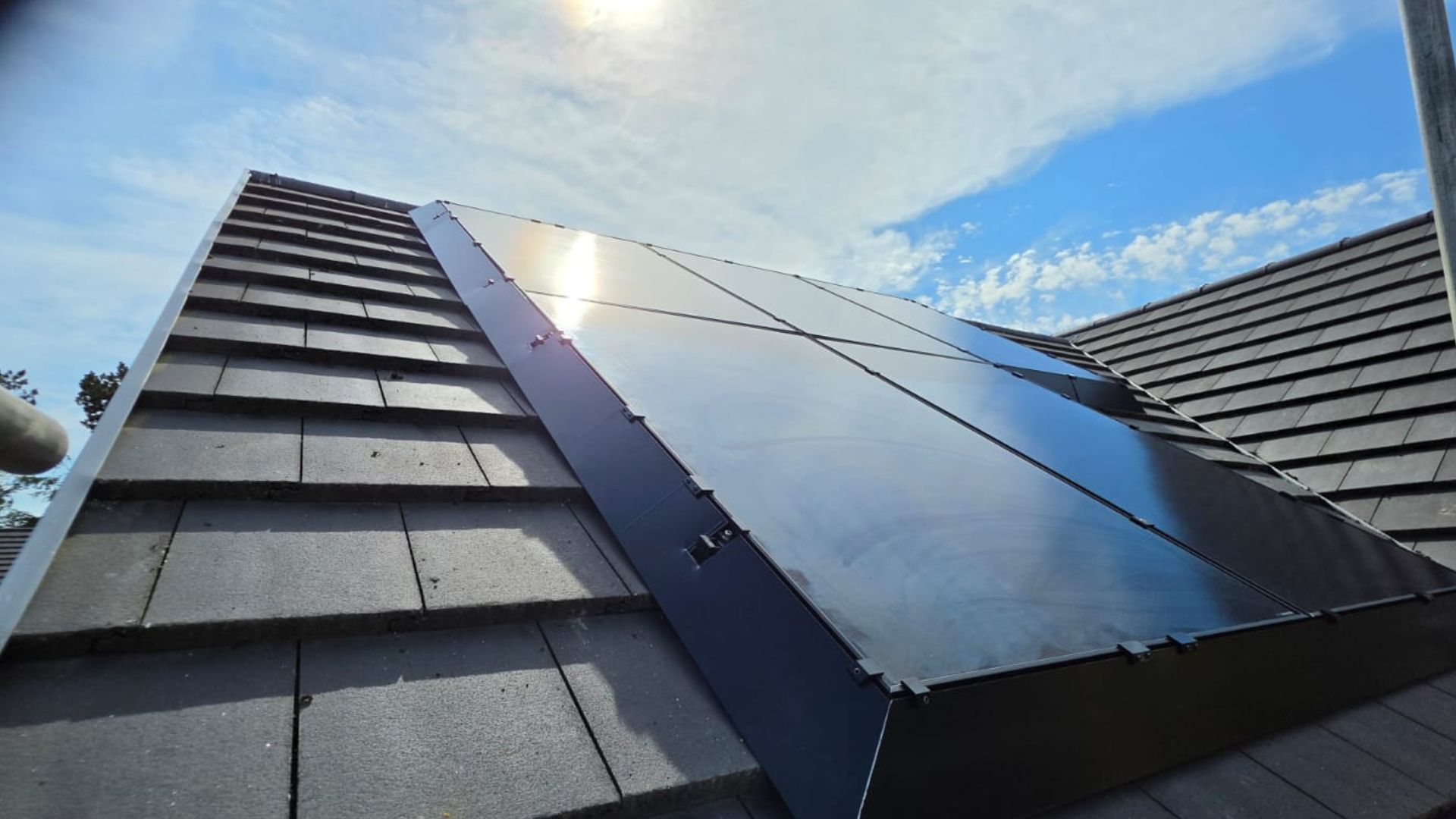
Once a quote for solar panel installation in Surrey is accepted, the installer books your survey (if you haven’t already had one before accepting) and submits a DNO application. There are two different DNO processes depending on the size of your system. The G98 connection notification covers small domestic systems (3.68 kW on a single-phase supply, or 11.04 kW on a three-phase supply) and is submitted after installation, whereas the G99 application covers larger or more complex systems and can take up to 45 working days for approval. The crew and any scaffolding are then scheduled in line with your anticipated DNO approval date (where applicable). Installation across Surrey and Hampshire typically takes one to two days. Before the crew leaves, the system is commissioned and tested, and after the install the homeowner receives a handover pack containing certification documents, including the MCS certificate and the electrical installation certificate.
If you’ve accepted a quote for solar panel installation in Surrey, what happens next decides whether the next few weeks go smoothly.
This is the stage most guides skip. We handle the survey, DNO notification, install day logistics and full commissioning on every project ourselves. One team, from the first van on your drive to the certificate that lands in your inbox afterwards.
Between signing your quote and installation day
The survey stage is where the technical decisions get made, and if you want the detail on how a solar quote and survey works, that’s covered separately.
Scaffolding usually goes up two days before the crew arrives and comes down two days after. We keep the same team on every project across Surrey and Hampshire, from survey through to handover.
Getting your property ready for the crew
Access causes more lost time on installation day than anything to do with the system itself. Clear the loft or roof space around your consumer unit before the crew arrives. A space stacked with boxes costs the first twenty minutes of the day, moved rather than worked on.
Off-road parking helps the crew and the scaffolding materials. If your drive can’t take a van and a scaffold tower for the day, tell us in advance rather than on the morning. Street parking or a permit can be sorted ahead of time. We’d rather sort a permit on the phone a week out than lose the first hour of your job working round a blocked drive.
Pets matter more than most people expect. A dog in the garden while scaffolding goes up is a stress for the dog and a hazard for the crew. Keep pets inside or elsewhere on installation day.
Occasionally something on site doesn’t match the original survey: building works since the last visit, or a consumer unit that’s been swapped. It’s rare, but it’s important to keep us informed about any changes ahead of the install so everything runs smoothly on the day.
Solar panel installation in Surrey and Hampshire: what happens on the day
Most domestic systems take one to two days, start to finish. A straightforward solar-only system on a single roof face is usually a one-day job. Add a battery, a gateway, an EV charger or a second roof face, and it typically runs to two.
The sequence is consistent. The crew checks the scaffolding is safe and signed off first, then mounts the panel rails and panels, and runs the DC cabling down to where the inverter will sit. The inverter goes in next, wired to the consumer unit, and the battery is sited and wired at the same time if it’s part of the system.
We install solar panels, plus the battery and any electrical work the project needs, as one job with one crew.
Combined installs (solar plus battery plus gateway and EV charger) are the ones most likely to run into a second day. There’s simply more to wire and more to test before sign-off.
DNO notification: G98, G99 and who does what
A DNO, or Distribution Network Operator, is the company that owns and runs the electricity wires to your property. It isn’t your energy supplier, and you’ll probably never deal with them directly. We do that on your behalf.
For most small domestic systems, that means the G98 process. The Energy Networks Association’s G98 connection guide describes it as a simplified “fit and inform” route. Under G98, notification goes to the network operator within 28 days of the system being commissioned, so this paperwork doesn’t hold up your installation date at all.
Larger or more complex systems fall under G99, which needs approval from the network operator before the system can be connected. That approval step is one of the few things that can genuinely affect how quickly a date gets confirmed.
Which network operator applies depends on your postcode. SSEN Distribution’s network across central southern England covers the Hampshire side of our patch, while UK Power Networks’ South East England network covers the rest of Surrey towards London. We submit to whichever one applies to your address. You don’t need to work out which is which.
We’ve seen what happens when a solar installer and a separate electrician are two different companies on the same project. The DNO notification gets submitted by one, the fuse board work gets scheduled by the other, and the two don’t always line up. That gap is exactly what delays a G99 application. Keeping DNO paperwork and electrical work under one contractor removes that risk.
G98 covers systems exporting up to 16A per phase (about 3.68 kW on single-phase). Above that threshold, or for anything more complex, G99 applies instead. Under G98, the installer has 28 days after commissioning to notify the network operator, well after your installation is finished.
Commissioning: testing the system before the team leaves
Commissioning is the live test that happens before the crew signs off and drives away, not a formality after the fact. The inverter and battery configuration is tested against how your household actually uses power, on Octopus Flux, Intelligent Octopus Flux or Agile where that applies. The export metering is checked before anyone leaves.
If a battery storage system is part of your install, this is where its tariff-specific settings are configured to your actual rate structure. That’s the difference between a battery that quietly saves money and one that sits half-charged doing very little.
If something doesn’t pass first time, which is rare, the crew stays and fixes it rather than booking a separate return visit. The same team that surveyed, installed and is now commissioning your system already knows the property. There’s no handover gap to explain the fault to someone new.
Handover: the documents you’ll receive after installation
Following your install, you’ll receive a handover pack containing your MCS certificate, your electrical installation certificate, product guides and warranties, and DNO connection confirmation, which can take up to three weeks to arrive.
The MCS certificate matters most for anything financial. It’s proof your system was designed, installed and commissioned to recognised standards, using certified products, by a certified installer.
It also gates the Smart Export Guarantee. MCS’s eligibility rules for the Smart Export Guarantee require the installation to have used an MCS-certified installer and MCS-certified products. Without the certificate, you can’t get paid for the electricity you export.
The electrical installation certificate is the NICEIC-standard safety sign-off, separate from the MCS paperwork and just as necessary. It confirms the electrical work itself, not just the solar array, meets the wiring regulations.
We’re dual NICEIC and MCS accredited, so we issue both certificates from one project. You don’t need a second contractor for the electrical sign-off. Check whether any installer you’re considering holds both certifications. A solar-only MCS certification doesn’t cover the electrical installation certificate on its own.
Once you’ve received your handover pack, you can register for SEG payments. For this you’ll need your MCS certificate and DNO connection confirmation, which can take up to three weeks after installation to arrive from the DNO.
Your first week of monitoring data will look inconsistent, and that’s normal. Generation varies with weather, and cloud cover changes the shape of the graph day to day. A week of mixed weather in Surrey or Hampshire tells you very little about how the system performs over a full year. Give it a proper season before drawing conclusions from the app.
We don’t treat the certificate landing in your inbox as the end of the relationship. The team that surveyed and installed your system is still the team you call if a question comes up a year or more on.
Want to know exactly what your installation day would look like?
If you’re weighing up solar panel installation in Surrey and Hampshire and want the DNO and handover process explained for your own property, get in touch. We’ll walk you through it before you commit.
Get your free solar quoteFrequently Asked Questions
How long does solar panel installation in Surrey take?
Most domestic solar panel installations in Surrey and Hampshire take one to two days. We’ll assess this at survey and confirm before the install how many days your system will take to complete. Adding multiple batteries, a gateway, an EV charger or a second roof face typically pushes the job to two days, mainly because there’s more to wire and test before the crew signs off.
What is a DNO and do I need to apply myself?
A DNO, or Distribution Network Operator, is the company that owns and runs the electricity network to your property, not your energy supplier. We submit the connection notification on your behalf under the G98 or G99 process, detailed in the Energy Networks Association’s G98 guidance for homeowners. You don’t need to contact the network operator yourself.
What is the difference between G98 and G99?
G98 covers small domestic solar and battery systems and is notified to the network operator within 28 days of the system being commissioned. G99 applies to larger or more complex systems and needs the network operator’s approval before the system can be connected, which is why G99 projects can occasionally take longer to schedule. We’ll pencil in the install pending DNO approval. Once we have it, we can confirm the date, and even bring it forward if the DNO comes back early.
What documents should I receive after my solar panels are installed?
You should receive your MCS certificate, your electrical installation certificate, your product warranties and manuals, and your monitoring app login. The MCS certificate and DNO connection confirmation are what you need for Smart Export Guarantee eligibility. DNO connection confirmations can take between one and four weeks to be issued.
What happens if my DNO application is delayed?
For smaller domestic systems under G98, this doesn’t come up, because notification happens after commissioning rather than before, so it can’t delay your installation date. G99 approval for larger systems can occasionally add time before a system connects, and we manage that directly with the network operator rather than leaving it with you to chase.
Do I need to be home on installation day?
Being reachable matters more than being present the whole time. We recommend being available on the day, particularly at the start for access, and again at the end for a walkthrough of the system and the monitoring app.
