


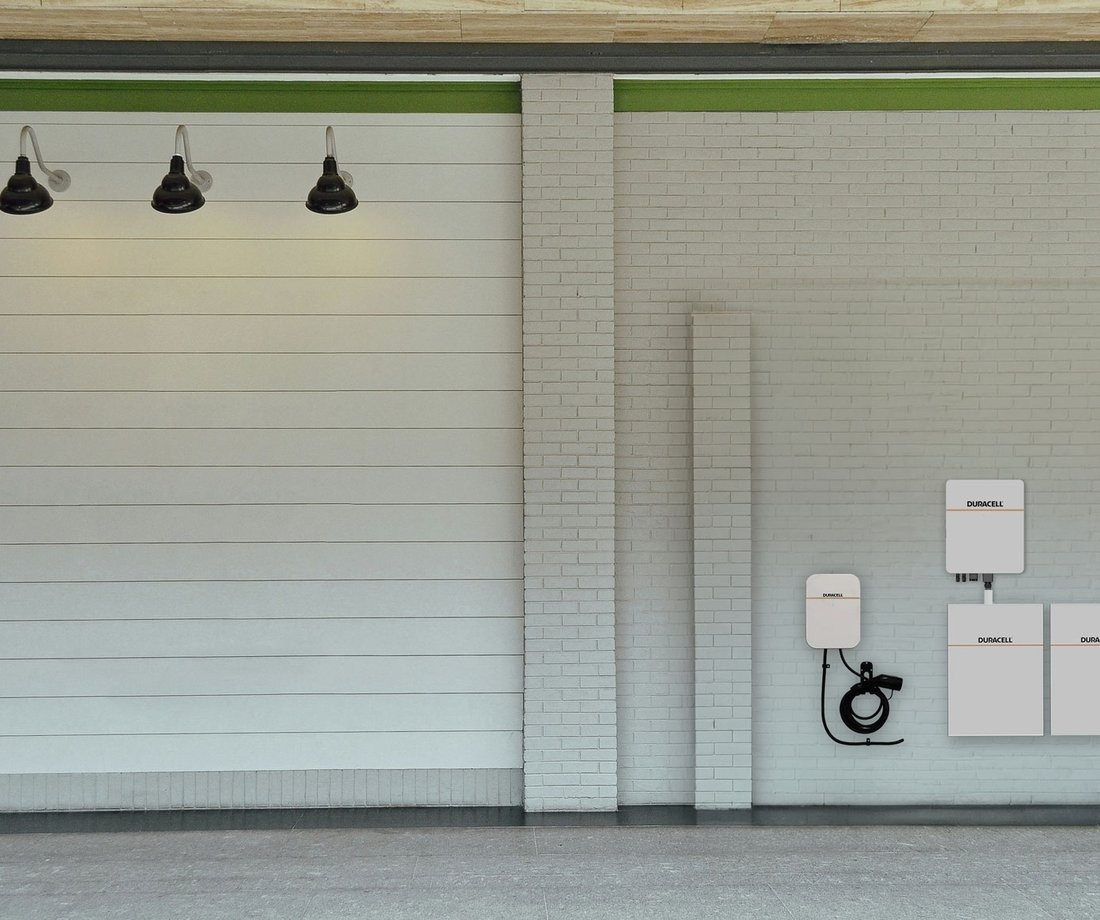
The Duracell Energy battery range launched in the UK in 2024, built by Cheltenham-based Puredrive Energy Ltd under an authorised Duracell licence. The ecosystem comprises three products: the Dura5 solar battery, the Dura-i hybrid inverter, and the DuraCharger EV. All three run from a single app. This guide explains what each product does, which specifications actually matter for a UK home installation, and whether the full ecosystem is the right fit for you.
Most of what you will find about Duracell Energy online is either marketing copy or very brief product listings. This guide is written from the perspective of an MCS-certified installer. That means we focus on what the specs mean in practice, what the installation process involves, and where the system performs well compared to alternatives.
Why “Duracell” on a home battery is worth paying attention to
The Duracell name belongs to one of the most recognised battery brands in the world, but Duracell Energy’s UK products are not made by Duracell Inc. They are manufactured by Puredrive Energy Ltd, a Cheltenham-based company that was awarded an authorised licence by Duracell in 2022 to manufacture, market, and distribute home energy storage products in the UK, Benelux, and South Africa.
That distinction matters less than you might think. Puredrive was founded in 2016 by Mark Millar and had already built a solid track record in UK home battery storage before the rebrand. Duracell approached Puredrive because of that engineering quality and UK support infrastructure. The manufacturing, R&D, and customer service teams are all UK-based near Cheltenham, the products have a UK-developed app, and the Puredrive team carries Duracell’s exacting standards approval. When something goes wrong, you are calling a UK team that has been in this market for nearly a decade.
The range launched publicly at the Fully Charged Show in London in March 2024. A Cheltenham flagship hub opened in June 2024, and a formal in-episode partnership with the Everything Electric channel (over one million subscribers) followed in 2025. The brand is actively marketing in the UK and building out its installer network.
The Duracell Energy battery: what the Dura5 specifications mean for your home
The Dura5 is a 5.12kWh lithium iron phosphate battery with 4.6kWh of usable capacity. It comes in a standard indoor version (wall-mount or stackable) and an IP65-rated outdoor model. Before you discuss system design, it is worth understanding a few of the headline specs and why they matter day to day.
Is this a safe and durable battery?
The Dura5 uses LiFePO4 cell chemistry. This is the same chemistry used in electric vehicles rather than the NMC lithium-ion found in earlier-generation home batteries. It handles heat and cold better, has a much lower risk of thermal runaway, and degrades more slowly with repeated charging. The Dura5 is rated for up to 8,000 charge cycles. At one full cycle per day, that is roughly 22 years before the cells reach the point where you would start noticing capacity loss. In a typical UK home, where batteries rarely run to 100% daily, effective life tends to be longer. The Energy Saving Trust battery storage guidance covers what to look for if you are still at the early research stage.
How quickly does it charge, and why does that matter?
The Dura5 charges and discharges at a 1C rate, meaning it can fill or empty completely in around one hour. A lot of home batteries run at 0.5C, which takes twice as long. This is not a spec to skip over. In the UK, peak solar output on a partly cloudy spring or autumn day may only last a couple of hours. A faster charge rate means the battery fills during that window instead of spilling generation to the grid because it cannot absorb it quickly enough. The same logic applies if you are on a short off-peak tariff slot: the battery reaches full charge within the cheap window rather than running out of time.
Can you start small and add more batteries later?
Yes. Dura5 units are modular and can be stacked or wall-mounted, up to 32 units per system. For most homes, the practical range is one to four units. A single 5kWh unit is a reasonable starting point for a smaller household or someone taking a first step into storage. Two units (10kWh) suits a three- or four-bedroom home with solar and an EV better. If you want to expand later, the key is to make sure the inverter is sized with headroom from day one. Retrofitting a larger inverter later adds cost and triggers another DNO approval process.
Does it cope with UK winters?
The Dura5 operates down to -10°C without internal heating elements. That sounds minor, but some competing batteries reduce usable capacity in cold weather to protect the cells, which effectively shrinks your storage through the months when you most need it. The IP65 outdoor-rated version also means installation is not limited to the house if your consumer unit is in a garage or outbuilding. The 10-year warranty covers both indoor and outdoor variants from the date of installation.
The Dura-i hybrid inverter: which size do you actually need?
The Dura-i converts solar DC to usable AC, manages battery charging and discharging, and connects everything to the grid. It comes in four sizes: 3.6kW, 4.6kW, 5kW, and 6kW. All are single-phase and all accept up to 10kWp of solar across two inputs, reaching 97.3% peak conversion efficiency. What changes between the sizes is the battery throughput, the backup output, and, most practically, how long your installation takes.
Does inverter size affect how quickly the installation can go ahead?
Yes, and this is the question most homeowners do not think to ask. UK grid connection rules set a limit of 3.68kW per phase for the simpler route: the G98 notification process. At 3.6kW, the Dura-i G3 sits just below that threshold. We submit a notification to your distribution network operator and installation can proceed without waiting for a formal approval decision.
The 4.6kW, 5kW, and 6kW models exceed that limit and require a G99 prior approval application instead. That means submitting technical documentation to your local network operator and waiting for written confirmation before we can commission the system. DNO timelines vary, but a few weeks is typical. If you have a specific move-in date, a summer installation window, or any time pressure, the inverter size choice directly affects your programme. We handle the G98 or G99 submission as part of every installation. The G98 Single Premises Summary Guide and G99 Type A Summary Guide from Energy Networks Association set out the technical requirements.
Does it need an external energy meter?
No. All Dura-i models have a built-in energy meter. Most competing hybrid inverters require a separate remote meter, which adds a component to the installation and creates another communication link that can occasionally cause monitoring gaps. The Dura-i’s integrated meter feeds real-time generation and consumption data directly into the Duracell Energy app with no extra hardware needed.
What about warranty cover?
The Dura-i comes with a standard five-year warranty, with an optional extension to ten years. If you are installing a Dura5 battery with a 10-year warranty, matching the inverter cover to the same period is worth budgeting for at the outset rather than leaving a gap you have to revisit later.
The DuraCharger EV: four charging modes and how to use them
The DuraCharger is a 7.4kW single-phase Type 2 tethered charger with a 4m cable. Its IP55 rating makes it suitable for outdoor wall installation in UK weather. The built-in PEN fault protection means no earth rod is required, which simplifies installation on most properties. At 7.4kW, it adds approximately 30km of range per hour for a typical EV. It is available in white or black, with a three-year warranty.
The thing that sets it apart from most smart EV chargers is how precisely it reads your solar generation. Where most “solar-compatible” chargers estimate what excess power is available and adjust accordingly, the DuraCharger measures the exact amount of energy that would otherwise go back to the grid and diverts it to your car. You get more of your own solar into the vehicle instead of exporting it at the Smart Export Guarantee rate.
Solar Only
Charges using your solar generation and nothing else. No grid draw at all. Works well if you can plan around the sun and want a fully renewable charge without compromise.
GreenBoost
Prioritises your solar, then tops up from the cheapest grid supply to hit your target charge level. A practical middle ground between clean energy and a reliably full car.
EcoSmart
Connects to your dynamic tariff (Octopus Go, Agile, and similar) and finds the cheapest overnight slot automatically. Nothing to schedule manually.
There is also an Override mode, which lets you set a specific rate and target completion time. This layers on top of any of the three modes above and is useful when you need the car fully charged by a particular time regardless of solar or tariff conditions.
The DuraCharger works as a standalone smart charger if you do not have a Dura5 battery or Dura-i inverter. App control, solar compatibility, and tariff scheduling are all available in any setup. The full four-mode integration and battery-EV coordination only activate when all three Duracell Energy components are linked through the same app. EV charger installation does not require MCS certification, but the work must be carried out by a suitably qualified NICEIC or equivalent electrician.
What it looks like when all three products work together
The Duracell Energy app manages the battery, inverter, and EV charger through a single interface using a UK-developed algorithm. Most apps in this category let you monitor your system. This one actively coordinates it.
The algorithm uses weather forecasts to spot when solar generation is likely to be low the following day. If it predicts a dull morning, it pre-charges the battery from cheap overnight grid electricity so you are not caught with an empty battery when clouds roll in. It applies the same logic to the EV charger, which means the battery and the car are not competing for the same cheap-rate window overnight. That coordination is the main thing that breaks down when you mix a battery from one brand with a charger from another, where the two systems operate independently and can end up drawing simultaneously.
For a household on a time-of-use tariff such as Octopus Go, a typical day looks like this:
- Overnight cheap window: the app charges the battery and the EV to the levels needed, coordinated so they do not clash.
- Morning solar: as generation builds, the battery tops up from solar first; any surplus routes to the EV if it is plugged in.
- Evening peak: the battery covers household demand from stored solar rather than pulling from the expensive grid rate.
- Export: any surplus generation you send back to the grid earns Smart Export Guarantee payments, provided the installation is MCS-certified.
GOV.UK’s Smart Export Guarantee guidance explains eligibility conditions and how to apply for export payments from an eligible supplier.
What does a Duracell Energy system cost?
The installed price depends on several things we confirm at survey: how many Dura5 units you need, the inverter size, whether the DuraCharger is included, the condition of your consumer unit, cable routing, and access requirements. What does not change is that DNO application paperwork and MCS certification are included in every system we quote. There are no hidden extras for those two items.
VAT on domestic solar and battery storage installations in Great Britain is currently 0% for qualifying installations. That rate is subject to change; check the current position before your installation via HMRC Notice 708/6. The online quote builder gives an indicative system cost based on your roof and usage in under five minutes. The survey visit then locks in the final design and price.
Is the Duracell Energy ecosystem right for you?
The system works best for homeowners who want solar, battery storage, and home EV charging running from one app, without needing to build their own multi-brand setup. The coordination benefit between the battery and the EV charger is only fully realised when all three products are present. If you already have a battery from another brand and want to add just the DuraCharger, it will work as a smart charger but without the full ecosystem integration.
On inverter sizing: for most three- or four-bedroom homes in Surrey and Hampshire with a south- or south-west-facing roof, a single Dura5 paired with the 3.6kW or 4.6kW Dura-i is the practical starting point. The 3.6kW model keeps the installation on the faster G98 notification route. The 5kW or 6kW model gives more headroom for larger arrays and higher loads, at the cost of the additional G99 approval period. A second Dura5 unit can be added later if storage needs grow, provided the inverter was sized with that in mind from the start.
The one clear limitation: the Dura-i is currently single-phase only. If your property has a three-phase supply, or if you need three-phase export for a commercial installation, a different inverter is needed.
We are MCS-certified and TrustMark-registered, and hold membership of the Renewable Energy Consumer Code (RECC). MCS certification is a condition of Smart Export Guarantee eligibility. TrustMark is a government-endorsed quality scheme; RECC provides a consumer code and formal dispute resolution process. You can verify our MCS status via the MCS certified installer search, and our full accreditation listings are on the accreditations page.
Want to talk through whether this system suits your home?
We install battery storage across Surrey, Hampshire, and the wider South East. Tell us your setup and we will advise on whether the Duracell Energy ecosystem, or another hardware combination, is the better fit for your property and usage pattern.
Get your free solar quoteFrequently Asked Questions
Is the Dura5 the same as the old Puredrive battery?
The Dura5 is made by Puredrive Energy Ltd, the same Cheltenham company behind the original Puredrive home storage range, now working under the Duracell licence. The ecosystem builds on Puredrive’s established battery technology and UK support infrastructure. Puredrive continues to support existing Puredrive product owners, but all new product development is under the Duracell Energy brand.
Can I add more batteries after the initial installation?
Yes. The modular design supports expansion up to 32 units. The constraint to plan around is the inverter: the Dura-i needs to be rated for the additional throughput that extra batteries require. For most domestic expansions of one or two units, a Dura-i specified with headroom at the original installation handles this without modification. Confirm expandability at the design stage; retrofitting a larger inverter later adds cost and triggers a repeat DNO process.
Will the system keep my lights on during a power cut?
The Dura-i switches to backup power within 10ms of a grid failure, fast enough that most household circuits will not notice the interruption. This is an Emergency Power Supply (EPS) configuration: which circuits get backed up depends on how the system is wired at installation. It is not the same as whole-home backup, which requires a different setup and changes the inverter and battery sizing. If grid resilience is a key reason you are considering storage, tell us that at the survey stage. Our EPS vs whole-home backup guide explains the practical difference.
Does the DuraCharger work if I do not have the Dura5 battery?
Yes. It works as a standalone smart charger with app control, solar divert, and dynamic tariff scheduling when paired with most hybrid inverters. The four charging modes and the battery-EV coordination are only fully active when all three Duracell Energy components are connected through the same app. If you have a battery from another brand and add the DuraCharger, you get a capable charger but not the full ecosystem integration.
Will I earn Smart Export Guarantee payments?
SEG payments apply to electricity you export to the grid from a solar system, provided the installation is MCS-certified. We are MCS-certified for solar PV and battery storage; you can verify this via the MCS certified installer search. Once your system is commissioned, you apply to an eligible supplier of your choice for an export tariff. Rates vary between suppliers. GOV.UK’s SEG guidance page lists eligible suppliers and sets out how to apply.
Next steps
If you are considering the Duracell Energy battery, inverter, or EV charger for a Surrey or Hampshire home, here is how to take it further.
- Battery storage installation: what battery storage involves, the brands we install, and how the survey and design process works.
- Online quote builder: indicative system design and cost in under five minutes, based on your roof and energy use. The survey visit confirms the final design and price.
- EV charging installation: the options available, installation requirements, and how solar integration works if you are combining the two.
- EPS vs whole-home backup: a plain-English explanation of the two backup configurations if grid resilience is part of your decision.
- Contact us: speak to the team directly before you are ready to quote. We serve homeowners across Surrey and Hampshire from our base in Tilford, Farnham.
