


The South East is one of the fastest-growing regions for electric vehicle (EV) adoption in the UK. With millions of commuters travelling into London, major ports like Dover and Southampton, and a growing population of environmentally conscious homeowners, the region is at the forefront of the country’s shift towards cleaner transport.
However, with this growth comes the main challenge of charging. While the public charging network is expanding rapidly, the reality is that most EV drivers need a more reliable, cost-effective solution than relying on supermarket chargers or waiting in line at motorway service stations. That solution is to install a home EV charging point instead.
Shortly, we’ll look at the real costs of charging at home versus public networks, the grants available right now, and what makes the South East different from other regions. Whether you’re a homeowner ready to make the switch or a business exploring options for staff and customers, this guide will help you uncover what you need to know about home EV charging points.
If you’re already looking to have an EV charging point installed, you’ll want to work with an MCS-certified installer who understands the South East’s specific requirements. Get in touch with Viable Power for expert advice and a no-obligation quote.
Why Public Charging Isn’t Enough
The UK’s public charging network has made impressive strides. As of January 2025, there were over 73,000 public charging devices across the country, a 37% increase from the previous year.
But the numbers don’t tell the full story.
- 57% of chargers are slow (3–8kW), typically found at supermarkets and car parks. These are fine for a top-up but not practical for daily use.
- Only 20% are rapid chargers (50kW or more), and their distribution is uneven. London has the highest number of total chargers, but the South East actually has stronger workplace charging provision thanks to government support schemes.
This patchy coverage leads to what drivers often call “performance anxiety”, the fear of being stuck without a quick way to recharge. For busy families, commuters, and businesses, relying on public infrastructure simply isn’t good enough.
That’s why experts say around 90% of EV charging happens at home. With a home EV charging point, you can charge overnight, save money, and avoid the stress of hunting for a free socket.
The Benefits of Installing a Home EV Charging Point
Convenience That Changes Daily Life
Imagine finishing your evening commute, plugging your car in, and waking up to a fully charged battery every morning. That’s the reality of having an EV charging point at home. No more detours to public charging stations, no waiting for a free space, and no worrying whether the charger will actually work.
This convenience is particularly valuable in the South East, where many towns function as commuter hubs for London. Train stations may offer limited charging, but for people who drive to work or use their EVs for school runs, errands and trips, EV charging point home installation provides freedom from reliance on public infrastructure.
Significant Long-Term Cost Savings
The financial case for a home EV charging point is strong. Charging at home is consistently cheaper than public charging by up to three times or more
Consider the numbers:
- A typical EV uses around 4,300 kWh per year.
- At 13p per kWh (a realistic off-peak tariff), that’s £550 a year.
- Compare that with £1,700 or more for petrol in an equivalent car, and the savings become clear.
Over five years, a homeowner could save more than £5,000 in fuel costs, especially if they make use of off-peak tariffs or integrate solar panels.
Boosting Your Property’s Appeal
As EV adoption rises, homes with a home EV charging point are becoming more desirable. Research shows that buyers increasingly view charging infrastructure as a must-have feature, much like double glazing or central heating. If you plan to sell your home in future, this simple upgrade could make it more attractive and even increase its value.
Sustainability and Energy Independence
A home EV charging point can certainly save you money and reduce emissions. For households with solar panels, the benefits go further: you can power your car directly from the sun. This integration also means you can start making inroads to cutting your carbon footprint and contribute to the UK’s net zero target.
What to Expect from an EV Charging Point Home Installation
A home EV charging point installation requires proper planning and management by experts to ensure maximum safety, full compliance and optimum efficiency. Here’s how it works:
Step 1: Site Survey
Your installer will check whether your property is suitable. They’ll assess:
- Electrical capacity – Most modern homes have panels rated between 100–200 amps, which is sufficient. Older properties may need upgrades.
- Parking availability – You’ll need off-street parking such as a driveway or garage.
- Location – Chargers need to be mounted on a sturdy surface, ideally close to both the parking space and the power supply.
This stage is crucial because it makes sure that your home can handle the extra load safely.
Step 2: Choosing the Right Charger
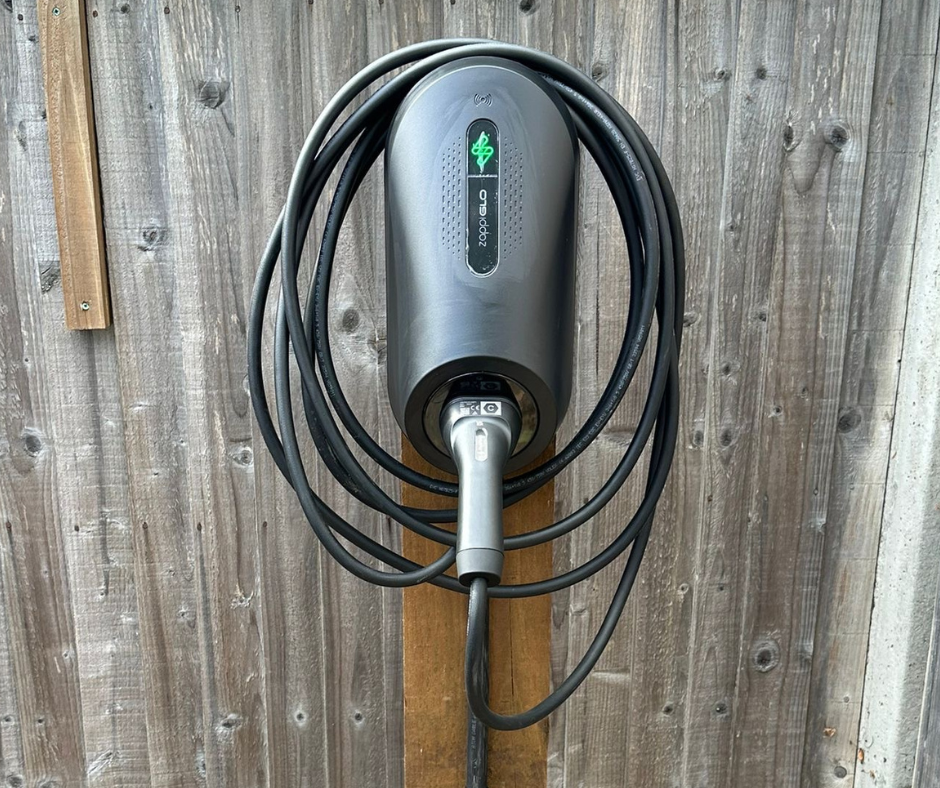
The most common home charger is a 7kW fast charger, which fully charges most EVs in 6–10 hours. Faster 22kW chargers exist, but they require a three-phase supply, which most UK homes don’t have.
You’ll also need to decide between:
- Tethered chargers, which come with a fixed cable for convenience.
- Untethered chargers, which require you to use your own cable but offer flexibility for different vehicles.
Since December 2022, all new chargers must be smart by law. This means they connect to the internet and allow you to:
- Monitor energy usage
- Schedule charging for off-peak times
- Integrate with solar power or storage batteries
Step 3: Professional Installation
The EV charging point installation is handled by an MCS-certified engineer who will ensure that everything is installed correctly. They’ll fit the unit, install a dedicated circuit, and provide certification that your charger meets UK safety standards.
Step 4: Updated Planning Regulations
In May 2025, the government made a major change: for most homes with private driveways, planning permission is no longer required to install a charger. This saves households up to £1,100 in costs The exception is for listed buildings or homes in conservation areas, where extra approvals may still be needed.
Grants and Incentives: Reducing the Cost of Installation
The UK government recognises that upfront costs can be a barrier, so several grants are available to support EV charging point home installation:
- Electric Vehicle Chargepoint Grant (EVCG) – Covers up to £350 or 75% of costs for renters and flat owners with off-street parking.
- Workplace Charging Scheme (WCS) – Offers up to £350 per socket for businesses, with a maximum of 40 sockets.
These incentives can make a big difference, especially for households or small businesses keen to future-proof their properties.
EV Charging Points for Businesses in the South East
While homeowners benefit from lower running costs and convenience, businesses in the South East have just as much to gain.
Attracting and Retaining Customers
Retailers, hotels and leisure venues can install charging points to draw in eco-conscious customers. Offering charging facilities gives visitors a reason to stop for longer, turning a quick errand into an extended visit that can increase the business owner’s bottom line..
Employee Benefits
For employers, offering EV charging is a tangible perk that supports staff who are transitioning to greener vehicles. It signals commitment to sustainability and helps with recruitment and retention.
Future-Proofing
Businesses that install chargers now avoid higher costs and disruptions later. They also align with government policies pushing for a zero-emissions economy. For high-traffic locations, the return on investment can be achieved in just 2–3 years.
The Future of EV Charging in the South East
The South East is a unique region: a commuter hub for London, a centre for trade, and a leader in workplace charging. Transport for the South East forecasts needing 28500 chargers by 2030 which is a five-fold increase compared to 5346 public charging points that were initially in place. That scale of growth simply can’t be met by public charging alone.
The real future lies in private infrastructure, homeowners and businesses installing their own home EV charging points. With smart chargers, solar integration, and supportive government grants, it’s now easier and more affordable than ever.
Making the Move to Home Charging
Installing an EV charging point at home is more than just a convenience now, it’s a smart financial decision, a boost for property value, and a step towards a sustainable future. For businesses, it’s a chance to attract customers, retain staff, and stay ahead of the curve.
The South East is already leading the charge in workplace installations, and with simplified planning rules and generous grants, there’s never been a better time to act. As a homeowner, landlord, or business owner, you owe it to yourself to invest in an EV charging point home installation.
Viable Power specialises in both residential and commercial EV charging installations across Surrey, Hampshire, and the wider South East. We’ll assess your property, recommend the right charger for your needs, and handle everything from grant applications to final certification.
Stop relying on public charging and start saving from day one. Get your free EV charging point installation quote here or call 01252 216 442.
